Materials & Board · 7 min read
SBS vs kraft vs corrugated for high-volume packaging
Three board families, three different jobs. What each one is, how it prints, what it costs you at volume, and how to specify the lightest board that actually does the work.
The short answer
SBS is a bleached virgin paperboard with a smooth white surface on both sides, used for printed retail cartons where color accuracy matters. Kraft is unbleached paperboard with a natural brown surface, chosen for an undyed look and its strength for its weight, though printed color shifts because the brown base shows through. Corrugated is a fluted medium between liners, used where crush resistance and shipping protection are required. At volume, the decision is which one does the job on the lightest caliper.
How to choose the right packaging material covers the decision for a single box. This guide takes the same three board families and looks at them the way a buyer purchasing at volume has to: as a material bought on every square inch of every unit.
The three families
| SBS | Kraft | Corrugated | |
|---|---|---|---|
| What it is | Bleached virgin paperboard | Unbleached paperboard | Fluted medium between liners |
| Surface | Smooth and white | Natural brown, slightly textured | Liner over flutes; some ribbing |
| Print behavior | Accurate color, fine detail | Color shifts over the brown base | Bold work reproduces best |
| Strength profile | Stiff for its caliper | Strong for its weight | High crush resistance |
| Ships alone? | Usually needs an outer | Usually needs an outer | Yes — built for transit |
| Specified by | Caliper in points | Caliper or GSM | Flute grade and liner weights |
| Typical use | Retail cartons, cosmetics, supplements | Natural-look cartons, sleeves, bags | Mailers, shipping cases, heavy goods |
SBS: when color accuracy is the requirement
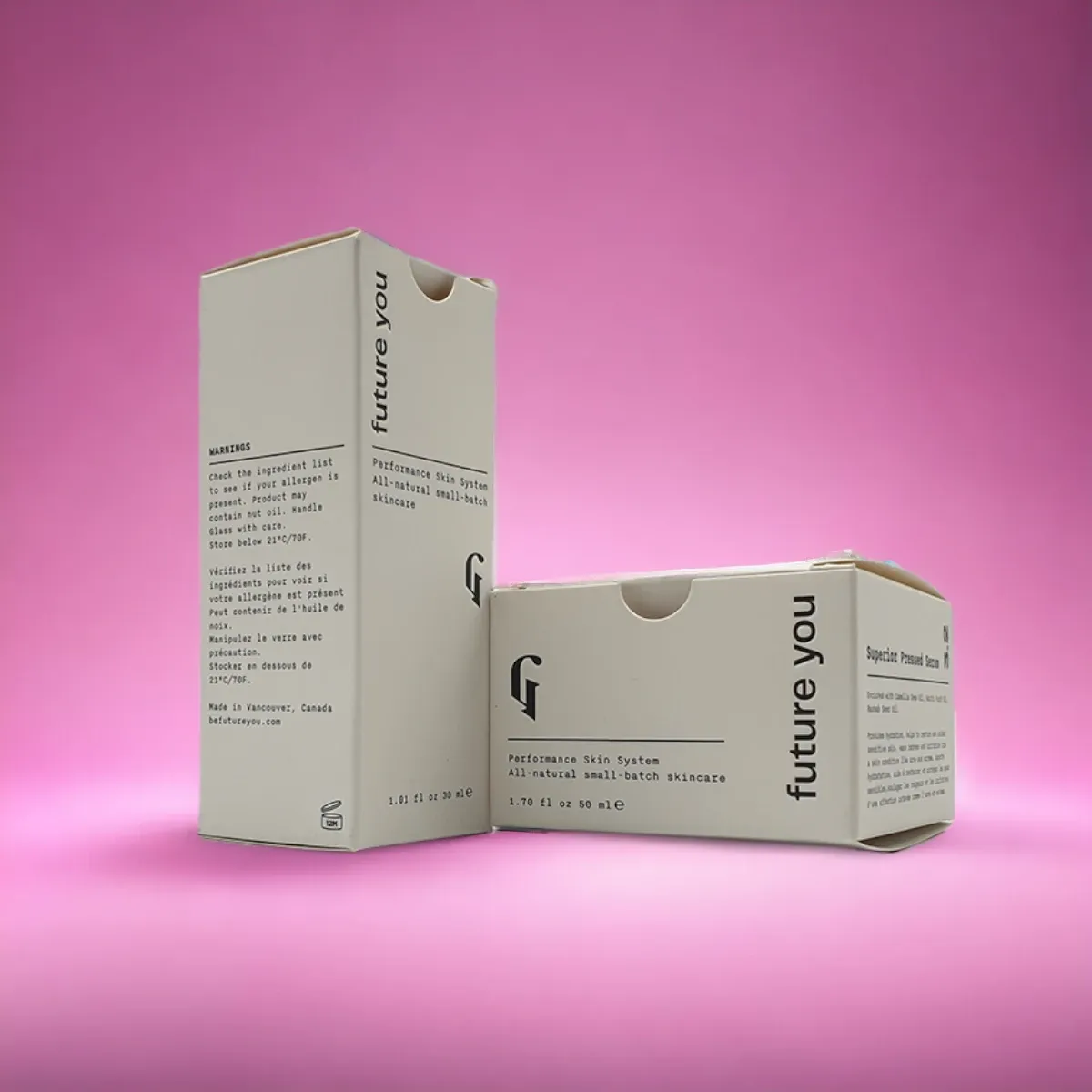
SBS — solid bleached sulphate — is the default for printed retail packaging. The bleached white surface gives ink a neutral base, so a specified Pantone prints as intended and photographic images hold detail.
At volume the variable to control is caliper, quoted in points, where one point is one thousandth of an inch. Every extra point is bought on every square inch of every carton. Specify the lightest caliper that carries the product's weight, survives handling and stacks if it needs to.
Kraft: when the look is the reason
Kraft is unbleached, so it keeps the natural brown of the pulp. Brands choose it because it reads as undyed and unfussy — which is a legitimate and deliberate aesthetic, not a cheaper option. Kraft is not automatically less expensive than SBS; cost depends on grade, caliper and market conditions, so treat any difference as something to confirm on your own quote.
The real consideration is print. Ink on a brown base is not ink on a white base: colors darken and shift, whites cannot be printed as white without an opaque underlay, and photographic reproduction is limited. Design for it rather than against it — one or two colors, confident shapes, type that works in a single ink.
Corrugated: when it has to survive the journey
Corrugated is structural. The flutes act as arches, which is what gives it crush resistance and cushioning at relatively low weight. It is the material for anything that ships on its own: mailers, shipping cases, heavier goods.
Specify it by flute grade and liner. For printed mailers the practical choice is usually between E-flute and B-flute — see E-flute vs B-flute. Where high-quality print is essential on corrugated, litho lamination bonds an offset-printed sheet to the board.
And greyboard, which is a different thing entirely
Greyboard is dense recycled board used as the structural core of a rigid box. It is never printed directly — a printed wrap is laminated over it. It belongs in this conversation only to be excluded from it: greyboard is not an alternative to SBS or kraft, it is the substrate of a different construction.
Specifying board at volume
- State what the box must do: the product weight, how it is handled, whether it stacks, and whether it ships alone or inside an outer.
- Let the supplier propose a board and caliper against that, rather than specifying a caliper you have inherited from a previous job.
- Ask whether a lighter caliper with a structural change — an auto-lock bottom, a board insert — would do the same job.
- Confirm it on a physical sample, filled with the real product. Board is a tactile decision.
- Ask the same question of every supplier so the quotes are comparable — see how to compare packaging quotes.
Sustainability, honestly
All three are paper-based and all three are, in principle, recyclable through paper streams. What actually happens depends on local facilities and on what has been applied to the board — some laminates and coatings complicate recycling, and a window film is a different material entirely.
If a specific environmental characteristic matters to your brand or your customers, ask your supplier for documentation on the exact grade being supplied rather than relying on a general statement about the material family. It is a reasonable thing to ask for, and a specification you can stand behind is worth more than a claim you cannot evidence.
The short version
SBS for accurate print on retail packaging, kraft for a natural look you design around, corrugated for anything that ships alone. At volume the discipline is specifying the lightest board that genuinely does the job, and confirming it on a filled sample rather than a description.
Send the product weight and how it ships and ask for a board recommendation rather than specifying one you inherited.
Terms used in this guide
- SBS
- Solid bleached sulphate: a bleached virgin paperboard with a smooth white surface on both sides, the standard substrate for printed folding cartons. It takes fine detail and accurate color, which is why it is used for retail packaging.
- Kraft
- Unbleached paperboard with a natural brown surface, produced by the kraft pulping process. Strong for its weight and chosen for an undyed, natural look; printing on it shifts color because the brown base shows through.
- Corrugated board
- Board made of a fluted paper medium glued between flat liners. The flutes give it crush resistance and cushioning at low weight, which is what makes it the material for shipping boxes and mailers.
- Greyboard
- Dense, rigid board made from recycled fiber, used as the structural core of a rigid box. It is not printed on directly — a printed wrap is laminated over it.
- Caliper
- The thickness of a board, quoted in the US in points (pt), where one point is one thousandth of an inch. A 24pt board is 0.024 inches thick. Caliper is how paperboard is specified; GSM is a weight measure and not interchangeable with it.
- GSM
- Grams per square meter: the weight of a paper or board per unit area. It describes weight, not thickness, so two boards at the same GSM can have different calipers depending on how densely they are made.
Questions
Related questions.
Anything not covered here, put it in the notes on your quote and we will answer it directly.
Ask on your quoteIs kraft board cheaper than SBS?
Not reliably. Board cost depends on the grade, the caliper and market conditions rather than on whether it is bleached. Kraft is chosen primarily for its natural appearance and its strength characteristics, so treat any price difference as something to confirm on your own quote.
Can you print white on kraft?
Only with an opaque white underlay, because the brown base shows through normal ink. It is achievable but it is an extra consideration in the artwork and the print specification, so raise it early rather than discovering it at proof stage.
What is the difference between caliper and GSM?
Caliper is thickness, quoted in the US in points where one point is a thousandth of an inch. GSM is weight per square meter. They describe different properties, and two boards with the same GSM can have different calipers, so make sure you and your supplier are specifying the same one.
Which board should I use for a product that ships direct to consumers?
Corrugated, if the box travels on its own — it is the only one of the three built for transit. A common arrangement is a printed SBS or kraft carton around the product, inside a corrugated mailer that does the shipping.
Keep reading
Related guides.
Packaging covered in this guide
Put it into a quote.
Materials, finishes and industries in this guide
Start here
Send us your dimensions. We’ll send back a box.
Or talk to a packaging specialist: (209) 444-0744