Materials & Board · 5 min read
E-flute vs B-flute for custom mailer boxes
The flute grade decides how well your mailer prints and how much punishment it takes. A direct comparison of the two grades used for custom mailers, and how to choose between them.
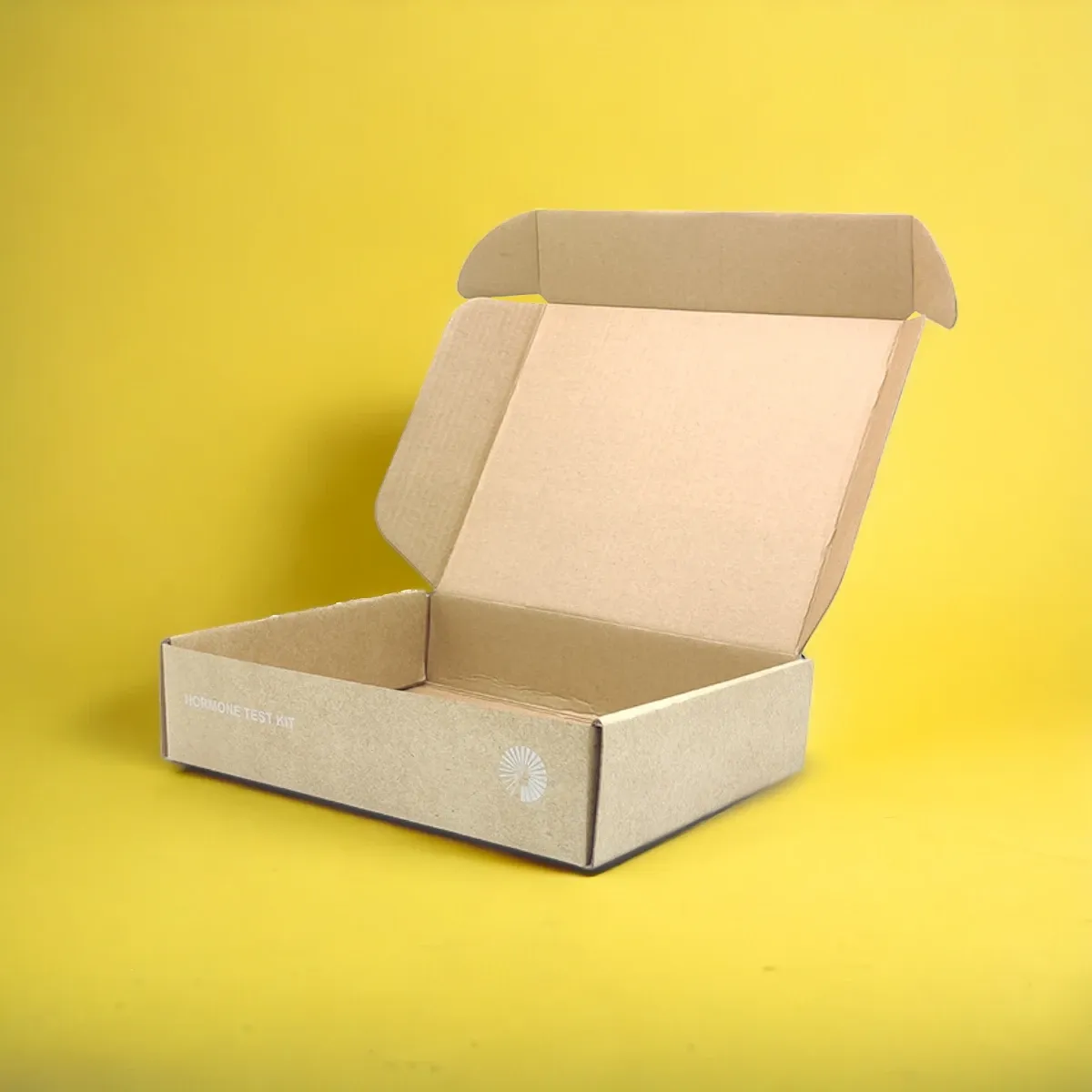
The short answer
E-flute is a fine corrugated flute of roughly 1.5 mm with a relatively smooth surface that prints well, which is why it is the usual choice for printed retail-facing mailer boxes. B-flute is roughly 3 mm, thicker and more crush resistant, with a coarser printing surface. Choose E-flute when print quality and a slimmer profile matter most, and B-flute when the contents are heavy or fragile or the parcel faces a longer, rougher journey.
If you are specifying a custom mailer box, the flute grade is one of two decisions that genuinely matter — the other being the size. It determines how your artwork reproduces and how much abuse the box absorbs.
What a flute is
Corrugated board is made of a wavy paper medium glued between flat liners. Those waves are the flutes. They act as a series of arches, which is what gives corrugated its crush resistance and cushioning at low weight. Flute grades are letters, and the letter describes the size of the wave.
The two grades used for mailers
| E-flute | B-flute | |
|---|---|---|
| Approximate thickness | About 1.5 mm | About 3 mm |
| Surface for printing | Relatively smooth | Coarser |
| Fine detail and small type | Reproduces better | Struggles more |
| Crush resistance | Lower | Higher |
| Cushioning | Less | More |
| Flat storage space | Less | More |
| Finished box profile | Slimmer | Bulkier |
| Typical use | Printed retail-facing mailers | Heavier or more fragile contents |
Both are widely used for custom mailers. Neither is better in the abstract — they are answers to different questions.
Choose E-flute when
- The mailer is brand packaging and the artwork carries detail, fine type or a photographic image.
- The contents are light to moderate in weight.
- The parcel is going through a normal courier network rather than a long multi-handover journey.
- You want a slimmer finished profile, which also helps with dimensional weight.
- You are holding a lot of flat stock and storage space is tight.
Choose B-flute when
- The product is heavy enough to develop momentum in a drop.
- The product is fragile — glass, ceramics, anything with a stem or a lid.
- The parcel faces multiple handovers or a long journey.
- Boxes will be stacked in storage or transit.
- The artwork is bold and simple and does not depend on fine detail.
Designing artwork for each
Corrugated is not a smooth substrate, and the flute structure can show through the liner — a subtle ribbing across large flat areas of solid color, more visible on B-flute than on E-flute.
- Favor bold shapes and confident type over fine hairlines and small reversed-out text.
- Be careful with large flat solids, especially dark ones, where any ribbing is most visible.
- Keep detail away from fold lines, where the board is creased.
- If you need genuinely fine reproduction on corrugated, ask about litho lamination, where an offset-printed sheet is laminated to the board.
The insert matters more than the flute
A common mistake is to solve a breakage problem by moving up a flute grade when the actual issue is that the product is moving inside the box. A fitted insert that holds the product still usually protects better than thicker board around a product that is free to rattle — and it lets you use a smaller box.
Work through custom inserts for bulk orders before upgrading the board.
The short version
E-flute for print quality and a slim profile; B-flute for protection and stacking. Design the artwork for the substrate you have chosen, and fix movement with an insert rather than with thicker board.
Ask for your mailer quoted in both grades — the difference is usually smaller than people expect, and it is easier to decide with two real samples in front of you.
Terms used in this guide
- E-flute
- A fine corrugated flute, roughly 1.5 mm thick, with a smooth surface that prints well. It is the usual choice for printed mailer boxes and retail-facing corrugated packaging where print quality matters more than maximum strength.
- B-flute
- A corrugated flute roughly 3 mm thick, thicker and more crush-resistant than E-flute but with a slightly coarser printing surface. Used where a mailer or shipper needs more protection.
- Corrugated board
- Board made of a fluted paper medium glued between flat liners. The flutes give it crush resistance and cushioning at low weight, which is what makes it the material for shipping boxes and mailers.
- Mailer box
- A corrugated box with an integrated lid and side wings that fold into place without tape, designed to survive a courier network on its own. Widely used for e-commerce because it opens cleanly and can be printed inside and out.
Questions
Related questions.
Anything not covered here, put it in the notes on your quote and we will answer it directly.
Ask on your quoteWhich flute is better for printed mailer boxes?
E-flute generally, because its finer flute gives a relatively smoother surface that reproduces detail and type better. B-flute prints perfectly well for bold, simple artwork but is less forgiving of fine detail.
Is B-flute significantly stronger than E-flute?
It is thicker and more crush resistant, which is the point of the larger flute. How much difference that makes to your parcel depends on the weight of the contents, how the product is held inside, and the journey — which is why a real shipping test is worth doing.
Can I print photographic images on corrugated?
Yes, though the flute structure can show through on large flat areas and fine detail is harder to hold than on solid paperboard. Where high-fidelity photographic reproduction is essential, litho lamination — printing offset then laminating to the board — is the usual route.
Does flute grade affect shipping cost?
Indirectly. A thicker flute makes the finished box slightly bulkier, which can affect the dimensional weight a carrier bills you for. The much larger factor is whether the box is sized correctly for the product in the first place.
Keep reading
Related guides.
Packaging covered in this guide
Put it into a quote.
Materials, finishes and industries in this guide
Start here
Send us your dimensions. We’ll send back a box.
Or talk to a packaging specialist: (209) 444-0744