Wholesale & Bulk Packaging · 8 min read
Bulk custom folding cartons: a complete guide
The folding carton is the workhorse of retail packaging and the format that rewards volume most. How they are built, which closure to specify, what board to use, and where the cost actually sits at scale.

The short answer
A folding carton is die-cut from a single sheet of paperboard, scored, glued at one seam and delivered flat to be erected at packing. It is the lowest-cost custom construction at volume because it uses relatively little material, ships and stores flat, and runs fast on press. At bulk quantities the decisions that matter most are the closure style, the board caliper, how well the blank nests on the press sheet, and how many finishing passes the specification carries.
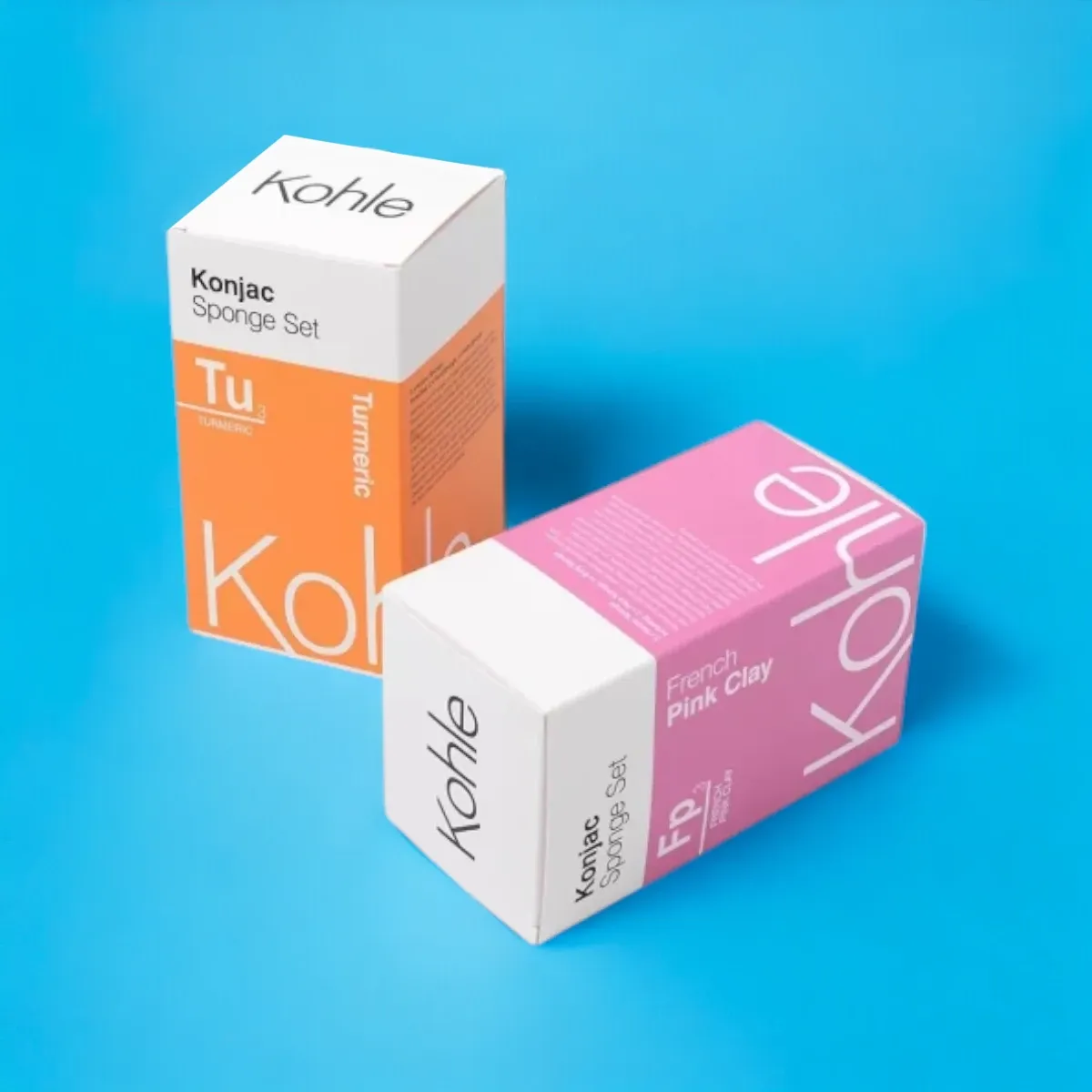
If you have bought retail packaging, you have bought folding cartons. Cosmetics, supplements, food, small electronics, toys, personal care — the printed paperboard box is the default format for products sold on a shelf, and it is the format whose economics improve most sharply with volume.
How a folding carton is built
A folding carton starts as a flat sheet of paperboard. The design is printed on the sheet, the sheet is die-cut to the blank shape, scored along every fold line, and glued at a single seam. It arrives flat and is erected at packing — by hand for most brands, by machine at high throughput.
Because the board itself carries the print, the entire surface is available for design, and every finish is available: lamination, foil, emboss, spot UV and windows.
Choosing the closure
The closure is the single most consequential structural decision, because it affects board usage, packing speed and how much weight the base will carry.
| Closure | How it works | Best for | Trade-off |
|---|---|---|---|
| Straight tuck end | Both flaps fold from the same panel | Clean front face, display packaging | Slightly more board than reverse tuck |
| Reverse tuck end | Flaps fold from opposite panels | Economical general-purpose carton | A visible seam edge on both ends |
| Auto-lock bottom | Glued base locks flat as the carton squares up | Heavier products, fast hand packing | More board; taller flat profile |
| Snap-lock bottom | Base panels tuck together manually | Lighter products, lower tooling | Slower to assemble at volume |
| Sleeve | Printed band over a plain tray or box | Several variants sharing one inner | An extra component |
At bulk volume, assembly time is a real cost even if it is your own team doing it. An auto-lock bottom costs a little more board and pays it back in packing speed and in not having product fall through the base.
Board: enough, not more
SBS is the standard for retail cartons — bleached, smooth, and the best surface for accurate color. Kraft gives an unbleached natural look but shifts printed color because the brown base shows through. For anything that has to survive a courier on its own rather than inside an outer, you are looking at corrugated instead.
Caliper is where money is quietly spent. Board is bought on every square inch of every carton, so over-specifying thickness is expensive at volume and under-specifying produces a carton that feels flimsy or fails under stacking. The right question is what the product weighs, how it is handled and whether cartons stack — then specify the lightest board that does that job. SBS vs kraft vs corrugated goes deeper.
Where cost sits at volume
Once the setup is spread across a few thousand units, the remaining cost is board area, ink, finishing passes and assembly. Three things move it:
Sheet utilization
Cartons are cut from large sheets, and how many blanks fit per sheet directly determines board consumption. A small dimensional change can sometimes yield an extra blank per sheet. Ask your supplier whether a nearby dimension nests better — it is free to ask and it applies to every unit.
Finishing passes
Each finish is a separate pass with its own setup, paid on every carton. At volume, audit them honestly: lamination usually earns its place, foil on a logo often does, spot UV over gloss lamination almost never does.
Ink coverage and color count
Heavy solid coverage and additional named Pantone colors both add cost. A design that achieves its effect with two well-chosen colors on an uncoated stock can be both cheaper and more distinctive than one that floods the sheet.
Artwork, at volume
Build artwork on the dieline supplied for your exact carton. Keep critical copy inside the safe area, carry bleed past every trim edge, and remember that a fold line is not a flat surface — detail that crosses a crease will distort, and foil that crosses one can crack. Put each finish on its own named layer as solid shapes. Preparing artwork for custom printed boxes covers the full file requirements.
Before you commit to a bulk run
- Confirm the internal dimensions against the actual product, including any insert.
- Approve a pre-production sample on the specified board — erect it, fill it, close it, carry it.
- Check every word of copy with whoever owns claims and legal text.
- Confirm the overrun and underrun tolerance.
- Get the reorder price in writing.
- Ask for the pallet count so you know what is arriving.
The short version
Folding cartons reward volume more than any other custom format. Choose the closure for how the box will be packed and what it must carry, specify board that matches the product rather than the ambition, get the size nesting well on the sheet, and keep the finishes to the ones doing real work.
Send your dimensions and quantity for a carton quote, and ask whether a nearby size nests better on the sheet.
Terms used in this guide
- Folding carton
- A box die-cut from a single sheet of paperboard, scored along its fold lines and glued at one seam. It ships flat and is erected at packing. Printing goes directly onto the board, which makes it the most common construction for retail products.
- Tuck end
- The closure style of a folding carton in which flaps tuck into the body of the box. A straight tuck has both flaps folding from the same panel; a reverse tuck has them folding from opposite panels, which uses less board but leaves a visible seam on both ends.
- Auto-lock bottom
- A folding-carton base whose glued flaps lock into a flat bottom as the carton is squared up, with no assembly beyond opening it. It is chosen for heavier products and for faster hand packing.
- SBS
- Solid bleached sulphate: a bleached virgin paperboard with a smooth white surface on both sides, the standard substrate for printed folding cartons. It takes fine detail and accurate color, which is why it is used for retail packaging.
- Caliper
- The thickness of a board, quoted in the US in points (pt), where one point is one thousandth of an inch. A 24pt board is 0.024 inches thick. Caliper is how paperboard is specified; GSM is a weight measure and not interchangeable with it.
- Glue seam
- The joint where the two edges of a die-cut carton blank are bonded to form the box. Its position is decided at the dieline stage, and artwork is laid out so the seam falls where it is least visible.
Questions
Related questions.
Anything not covered here, put it in the notes on your quote and we will answer it directly.
Ask on your quoteWhat is the difference between a folding carton and a corrugated box?
A folding carton is cut from a single solid sheet of paperboard and is designed for retail display and protection on a shelf. A corrugated box has a fluted medium between liners, which gives it far more crush resistance, and is designed to survive shipping.
Which closure is cheapest for a folding carton?
A reverse tuck end generally uses the least board, which makes it economical on material. An auto-lock bottom uses more board but is much faster to erect, so at volume the assembly saving can outweigh the material difference.
Can folding cartons be printed on the inside?
Yes, and it is a strong effect on an unboxing. It is a real cost because it is additional coverage and sometimes an additional pass, so specify it explicitly in your RFQ rather than assuming it is included.
What board thickness do I need for a folding carton?
It depends on the product's weight, how the carton is handled and whether cartons stack. Rather than picking a caliper, tell your supplier the weight and the handling and ask them to propose the lightest board that works, then confirm it on a physical sample.
Keep reading
Related guides.
Packaging covered in this guide
Put it into a quote.
Materials, finishes and industries in this guide
Start here
Send us your dimensions. We’ll send back a box.
Or talk to a packaging specialist: (209) 444-0744