Wholesale & Bulk Packaging · 8 min read
Bulk custom mailer boxes for e-commerce brands
The mailer is the only packaging most online customers ever see, and it is charged for twice — once by the printer and once by the carrier. How to specify it at volume without paying for air.
The short answer
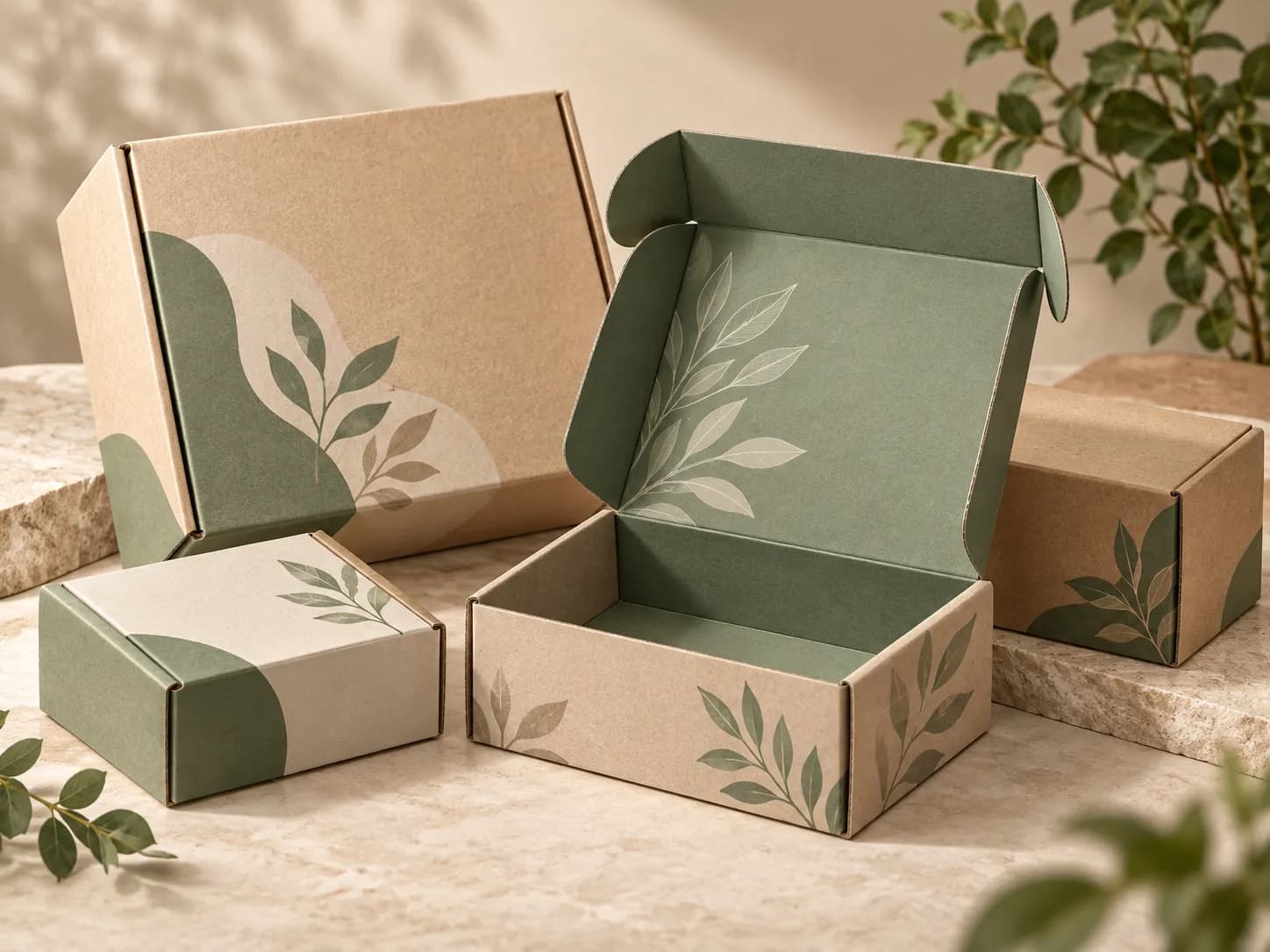
A custom mailer box is corrugated, has an integrated lid and side wings that fold closed without tape, and is built to survive a courier network on its own. Buying at volume, the two decisions that matter most are the flute grade — E-flute for print quality, B-flute for more protection — and the size, because an oversized mailer is charged again by the carrier through dimensional weight on every single order.
For a direct-to-consumer brand, the mailer box is the whole physical brand experience. It is the only thing the customer touches, it arrives in their hands rather than on a shelf, and it has to survive a courier network on its own.
It is also the packaging most likely to be quietly costing you money twice: once when you buy it, and again every time a carrier bills you for the space it takes up.
What a mailer box actually is
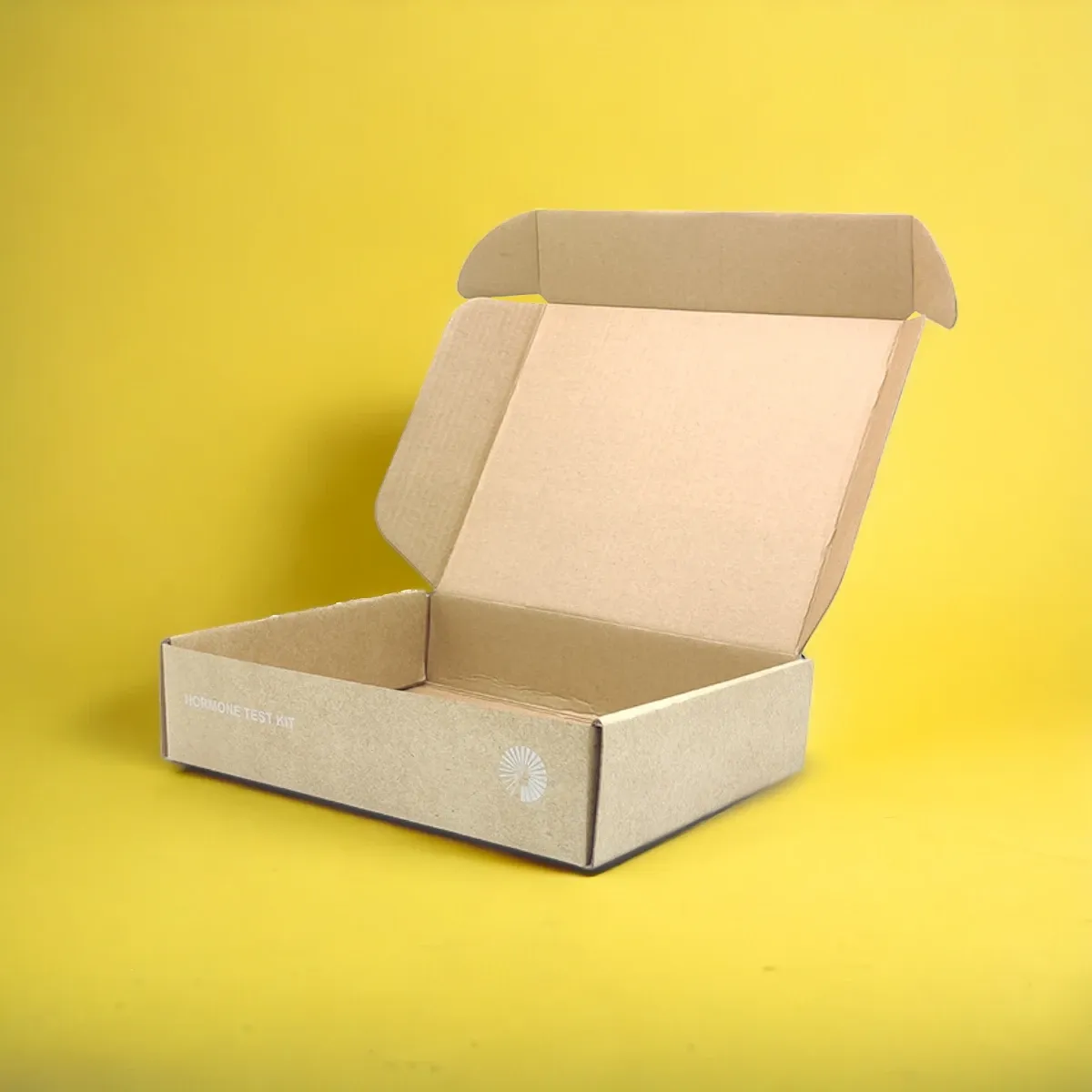
A mailer is made from corrugated board — a fluted paper medium glued between flat liners — cut so that the lid and side wings are part of the same piece. It folds closed and locks without tape, which is why it opens cleanly at the other end.
It ships flat, is erected at packing, and can be printed inside and out. That interior surface is the single most under-used piece of real estate in e-commerce packaging.
Flute grade: the first decision
The flute is the wave of paper inside the board, and its size sets the trade-off between print quality and protection.
| E-flute | B-flute | |
|---|---|---|
| Approximate thickness | About 1.5 mm | About 3 mm |
| Print surface | Smoother — better for detailed artwork | Coarser — heavier coverage hides less well |
| Crush resistance | Lower | Higher |
| Typical use | Retail-facing printed mailers | Heavier or more fragile contents |
| Flat storage | Takes less space | Takes more space |
Most printed e-commerce mailers are E-flute, because the artwork is doing brand work and the contents are not especially heavy. Move to B-flute when the product is heavy, fragile, or shipping long distances through multiple handovers. E-flute vs B-flute covers the decision properly.
Size is the expensive decision
Carriers bill on dimensional weight — a billing weight calculated from the parcel's volume — and charge whichever is greater, the actual weight or the dimensional one. A mailer larger than the product needs therefore adds a shipping charge to every single order, forever.
At bulk volume this is frequently the largest packaging-related cost in the business, and it does not appear on the packaging invoice at all. Reducing dimensional weight costs works through it.
Size the mailer to the product plus the insert plus minimal clearance — not to a round number, and not to the box you happen to have. How to measure your product explains what to measure.
Printing: inside as well as out
Printing the interior costs more — more coverage, sometimes an extra pass — but it is the moment the customer is actually paying attention. A printed interior, a message on the inside of the lid, or a pattern that is only visible once the box is open does more for repeat purchase than the same spend on the outside.
Practical notes: corrugated is not a smooth substrate, so fine detail and small reversed-out type struggle, particularly on B-flute. Bold shapes, confident type and flat color reproduce well. Keep artwork away from the fold lines where the board will crease.
Inserts, void fill and breakage
An insert that holds the product still usually costs less than the void fill it replaces, presents far better on opening, and reduces breakage. Die-cut corrugated inserts are the most economical; molded pulp suits curved products; foam is for genuinely fragile or heavy items.
A correctly sized box with a fitted insert also reduces dimensional weight, because you are not shipping empty space. The two problems have the same solution.
Buying mailers at volume
- Confirm internal dimensions against the product plus insert, with minimal clearance.
- Choose the flute grade for the contents and the journey, not by default.
- Decide inside printing deliberately — it is where attention is.
- Specify the insert in the same quote, not as an afterthought.
- Approve a pre-production sample, then pack it with the real product and post it to yourself.
- Check the pallet count and confirm you can receive it.
- Get the reorder price — mailers are consumed continuously, so this is the number that matters.
The short version
Specify the flute for the journey, size the box to the product rather than to convenience, use the interior, and put the money into an insert rather than void fill. The mailer is bought once and paid for on every shipment, so sizing discipline compounds.
Get a mailer quote at your volume — and send the product dimensions, not the size of the box you are using now.
Terms used in this guide
- Mailer box
- A corrugated box with an integrated lid and side wings that fold into place without tape, designed to survive a courier network on its own. Widely used for e-commerce because it opens cleanly and can be printed inside and out.
- E-flute
- A fine corrugated flute, roughly 1.5 mm thick, with a smooth surface that prints well. It is the usual choice for printed mailer boxes and retail-facing corrugated packaging where print quality matters more than maximum strength.
- B-flute
- A corrugated flute roughly 3 mm thick, thicker and more crush-resistant than E-flute but with a slightly coarser printing surface. Used where a mailer or shipper needs more protection.
- Corrugated board
- Board made of a fluted paper medium glued between flat liners. The flutes give it crush resistance and cushioning at low weight, which is what makes it the material for shipping boxes and mailers.
- Dimensional weight
- A billing weight carriers calculate from a parcel's volume rather than its actual weight, charging whichever is greater. A box larger than the product needs therefore raises the shipping cost even when nothing heavy is inside it.
- Void fill
- Material added to take up empty space in a shipping box so the contents cannot move. A correctly sized box and a fitted insert reduce the need for it, and reduce dimensional weight at the same time.
Questions
Related questions.
Anything not covered here, put it in the notes on your quote and we will answer it directly.
Ask on your quoteWhat is the difference between a mailer box and a shipping carton?
A mailer has an integrated lid and side wings that fold closed without tape and is usually printed as brand packaging. A plain shipping carton is a regular slotted case designed purely for transit. Mailers are for what the customer opens; cartons are for what moves on a pallet.
Should I print the inside of my mailer boxes?
It costs more, but it is the only moment the customer is fully focused on the packaging. If any of your packaging spend is about brand rather than protection, the interior is usually where it does the most work.
How many mailer sizes should an e-commerce brand stock?
Enough that most orders ship in a box close to their actual volume, because oversized boxes incur dimensional weight charges on every shipment. Map your top-selling order configurations and size for those rather than trying to cover everything with one box.
Do I still need void fill with a custom mailer?
Much less, if the box is correctly sized and the product is held by an insert. A fitted insert generally presents better, reduces breakage and costs less than filling empty space — and it lets you use a smaller box in the first place.
Keep reading
Related guides.
Packaging covered in this guide
Put it into a quote.
Materials, finishes and industries in this guide
Start here
Send us your dimensions. We’ll send back a box.
Or talk to a packaging specialist: (209) 444-0744